Start with the frontage and use
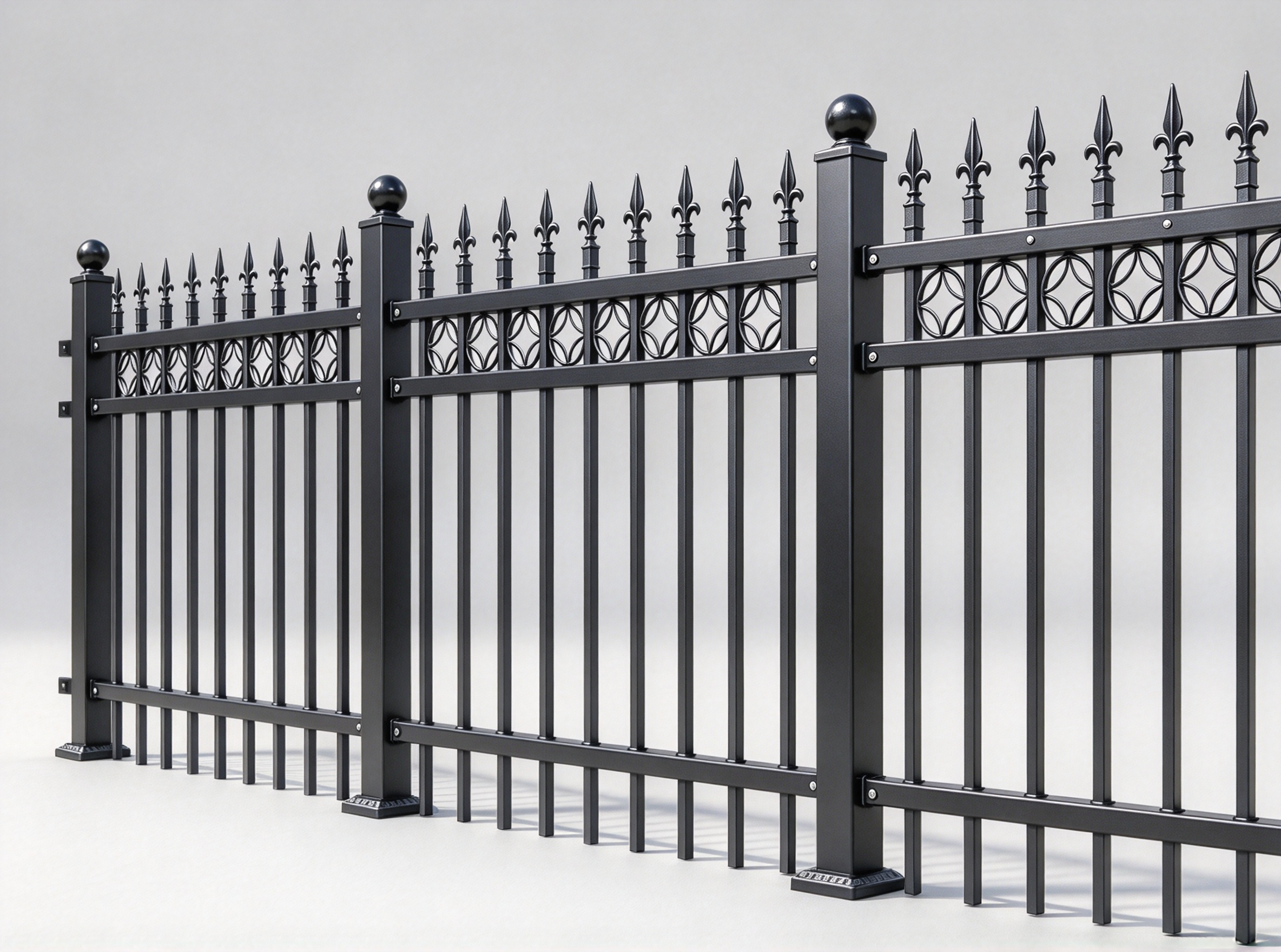
Dingjiang decorative steel fence panels are offered for residential, garden, school, park and commercial boundaries. The pointed-picket appearance is only one part of the specification. Panel height, spacing, rail sections, post details and the finish should all appear on the agreed drawing.
Define panel dimensions clearly
The published range includes panel heights of 1.2–2.4 m, with final dimensions confirmed for each project. Distinguish the fabricated panel width from the installed post-centre distance. Include the gap under the panel and any steps or slopes in the fence run.
Agree sections and connections
- Rail and picket profiles, wall thicknesses and spacing.
- Intermediate, corner, end and gate post sections.
- Brackets, fixing holes, bolts and caps.
- Embedded or base-plated post installation.
- Any decorative top or special panel geometry.
Dimensions that look similar in a photograph can produce different strength and weight. Use a drawing and material schedule to compare quotations.
Coordinate gates with the fence
Provide the required clear opening, gate height and opening direction. State whether a gate is pedestrian or vehicle access and whether manual or powered operation is intended. Gate posts and hardware should be selected for the actual leaf size and operating requirements; do not simply reuse the fence-post specification.
Confirm finish and handling
Discuss galvanised or coated finishes and the required colour reference. Agree how pointed tops and coated surfaces will be protected in packing. Check dimensions, finish and accessory quantities before installation.
Prepare a project enquiry
Browse our Steel Fence range and send the perimeter layout, panel and gate dimensions, finish and delivery destination. Site-specific foundations and structural adequacy should be confirmed by the project designer.
Specification guidance from Dingjiang. Final dimensions, materials, finish and supply scope are subject to the agreed quotation and drawing.