Keep the two applications distinct
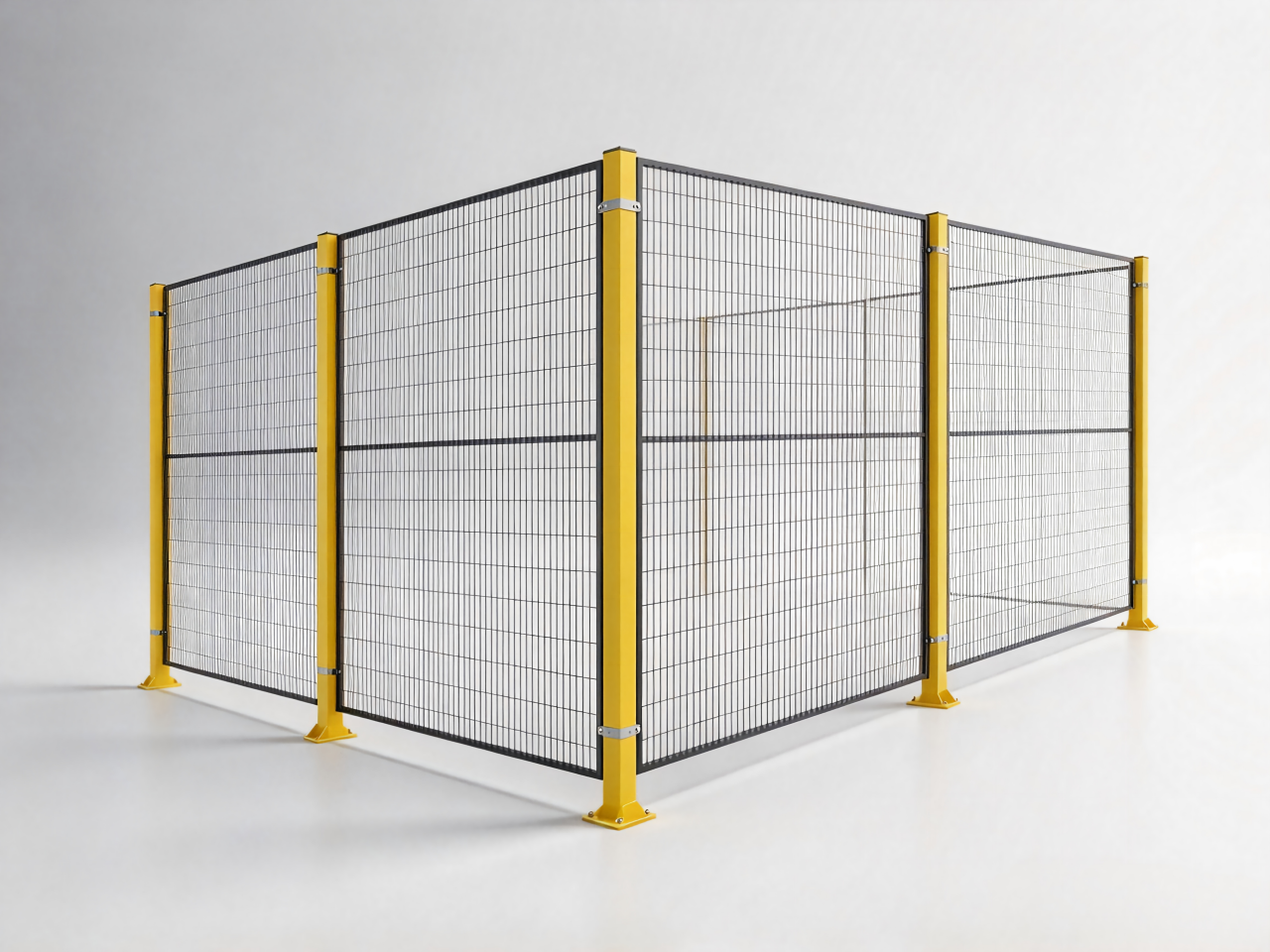
Machine safety fence and anti-climb wall spikes address different problems. A machine enclosure helps define access around equipment; wall spikes are a perimeter deterrent. Wall spikes are not a substitute for machinery guarding, and a mesh panel alone does not establish a compliant safety system.
Specify the machine enclosure
Dingjiang’s published machine fence options include 3 mm wire, 20 × 100 mm mesh and custom heights from 1–3 m, with powder-coated or hot-dip galvanised finishes. State panel width, post locations, access doors and fixing details. The finished enclosure must be designed around the machine layout and its hazards.
Coordinate safety requirements
Give the machinery integrator the mesh opening, fence height and distances to moving or hazardous parts. The integrator should determine safe separation, access control and any interlock requirements through the applicable risk assessment. Confirm how maintenance personnel enter and leave the enclosure and whether emergency access is needed.
Specify wall spikes separately
For perimeter work, Dingjiang’s published wall spike options include a standard 500 mm length and 110 mm spike height, with custom dimensions available by agreement. Identify the wall or fence substrate, fixing-hole layout, finish and the total run length. Confirm local restrictions and public-access considerations before selecting a sharp deterrent.
Prepare drawings and packing requirements
Provide a marked-up plan showing doorways, corners, changes in level and nearby services. Agree safe packing and handling for pointed components. Ask for each component type to be identified so site teams can match the delivery to the installation drawing.
View the product families
Browse Machine Safety Fence or Anti-Climb Wall Spikes, then contact Dingjiang with the intended application and dimensions.
Specification guidance from Dingjiang. Final dimensions, materials, finish and supply scope are subject to the agreed quotation and drawing.